 notidy
A break from added sugarEklenmiş şekere mola
Cutting back on added sugar is less about willpower and more about knowing where it hides. Here is what the WHO means by free sugars, practical ways to cut back, and how to count sugar-free days.Eklenmiş şekeri azaltmak, iradeden çok şekerin nerede saklandığını bilmekle ilgili. Burada WHO’nun serbest şeker tanımını, azaltmanın pratik yollarını ve şekersiz günleri saymayı bulacaksın.
What “free sugars” means
The WHO uses the term free sugars. They include sugars such as glucose, fructose and table sugar “added to foods and drinks by the manufacturer, cook or consumer”.
They also include “sugars naturally present in honey, syrups, fruit juices and fruit juice concentrates.”
In plain words: sugar added to food or drink, plus the sugar in honey, syrups and juice.
The WHO guideline “does not refer to the sugars in fresh fruits and vegetables, and sugars naturally present in milk”.
The NHS uses the same idea: “Sugar found naturally in milk, fruit and vegetables does not count as free sugars.”
How much, according to the WHO and the NHS
The WHO “recommends adults and children reduce their daily intake of free sugars to less than 10% of their total energy intake.”
It adds a further, conditional recommendation: below 5%, or “roughly 25 grams (6 teaspoons) per day”.
The NHS gives a daily limit for adults: “no more than 30g of free sugars a day”, roughly 7 sugar cubes.
A lot of sugar sits in food you wouldn’t call a sweet. The WHO notes that “1 tablespoon of ketchup contains around 4 grams (around 1 teaspoon) of free sugars”.
It adds: “A single can of sugar-sweetened soda contains up to 40 grams (around 10 teaspoons) of free sugars.”
Practical ways to cut back
- Start with drinks. They are an easy place to begin. The NHS suggests keeping fruit juice and smoothies to “a maximum of 150ml (a small glass) in total per day”.
- Look at breakfast. The NHS suggests choosing “unsweetened wholegrain breakfast cereals that are not frosted, or coated with chocolate or honey.”
- Read the label. The NHS calls “more than 22.5g of total sugars per 100g” high, and “5g or less of total sugars per 100g” low.
- Step down, not off. Halve the sugar in your tea or coffee for a week, then let it go.
- Plan the 4 pm moment. If something sweet comes with a routine, decide what you will have instead before the moment arrives.
Counting sugar-free days
Decide what counts before you start. A simple rule: a sugar-free day is a day without foods or drinks with added sugar.
In line with the WHO and NHS definitions, fruit, vegetables and plain milk don’t break it.
Keep the rule kind and clear. “No sweets, no sugary drinks, no sugar added at home” is easier to live with than checking every label in the house.
Two counts help: days in a row, and total sugar-free days this month. If a day doesn’t go to plan, the first may reset, but the second keeps every day you managed.
You can also count sweets skipped. If you usually have two sweets a day, a week without them is fourteen you didn’t have.
Cravings and hard hours
The pull toward something sweet often arrives at the same times: after lunch, in the afternoon slump, in front of the TV.
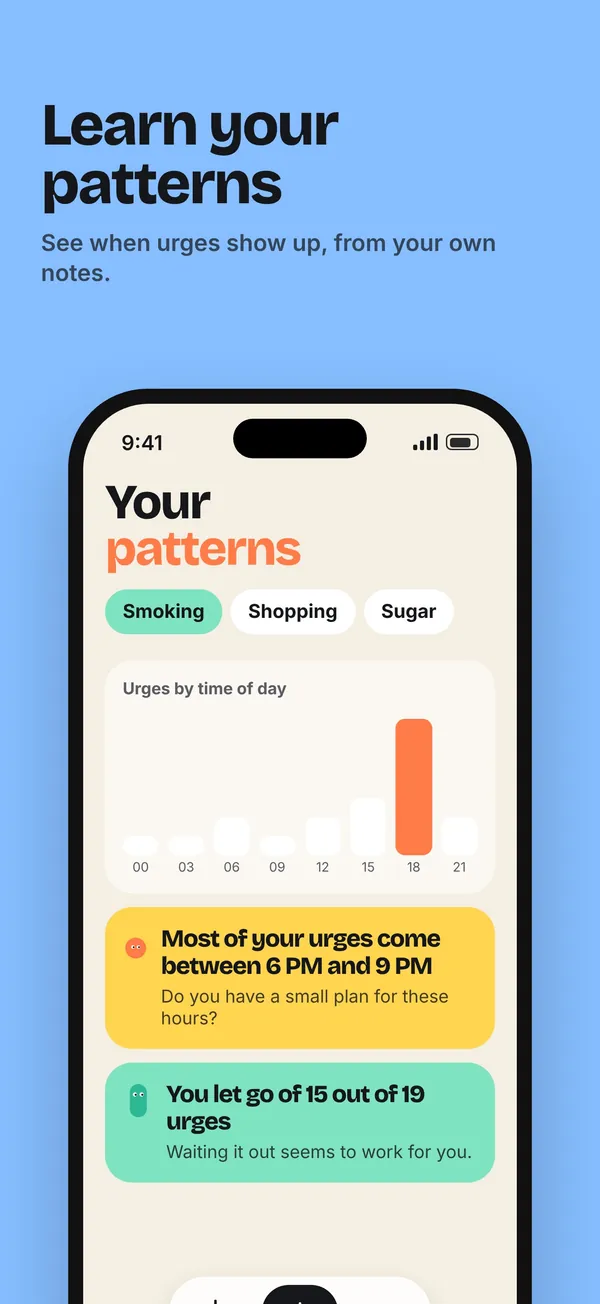
A short note each time, with the hour and what was going on, will show you your own pattern within a week or two.
When a craving comes, give it two minutes before you decide. Our guide to urge surfing explains how to watch a craving rise and fall.
Keep it calm
This guide makes no promises about weight or your body. A sugar break is a way to notice how much added sugar is in your day, and to choose on purpose.
If counting starts to feel obsessive, or food starts to feel like a test, stop and talk to your doctor. If you have a history of eating disorders, talk to a professional before you start.
How Notidy fits in
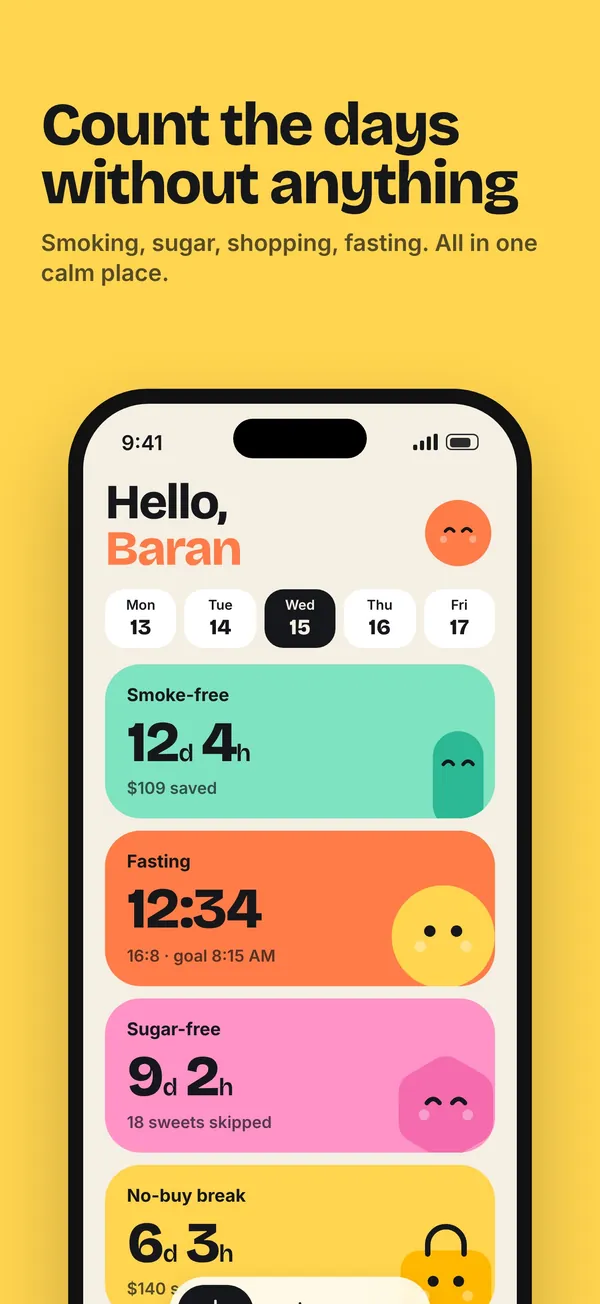
Notidy has a ready-made sugar counter for your sugar-free days and hours. It can also count the sweets you skipped, from your own numbers.
Its little character grows happier as the days add up, and a roadmap for sugar unlocks along the way. Each card names its source (WHO or NHS) and is general information.
When a craving hits, “I’m craving it” starts a 2-minute pause with a breathing wave and your own reason.
Insights show your hardest hours, and a gentle heads-up can arrive before them.
If you start over, your effort and record stay in your history. Notidy doesn’t tell you what to eat, and it isn’t medical advice.
Sources
- WHO calls on countries to reduce sugars intake among adults and children. World Health Organization (WHO), 4 March 2015.
- Sugar: the facts. NHS, Last reviewed 19 May 2023.
All sources were opened and checked on 19 October 2026. Health facts are quoted as general information, not medical advice.
Serbest şeker ne demek?
WHO, serbest şekeri üretici, aşçı ya da tüketici tarafından yiyecek ve içeceklere eklenen glikoz, fruktoz ve sofra şekeri gibi şekerler olarak tanımlıyor.
Bal, şurup, meyve suyu ve meyve suyu konsantrelerinde doğal olarak bulunan şekerler de bu tanıma giriyor.
Kısacası: yiyeceğe ya da içeceğe eklenmiş şeker, artı bal, şurup ve meyve suyundaki şeker.
WHO’nun kılavuzu taze meyve ve sebzelerdeki şekerleri ve sütte doğal olarak bulunan şekerleri kapsamıyor.
NHS de aynı fikri kullanıyor: Süt, meyve ve sebzelerde doğal olarak bulunan şeker serbest şeker sayılmıyor.
WHO ve NHS’e göre ne kadar?
WHO, yetişkinlerin ve çocukların günlük serbest şeker alımını toplam enerji alımının %10’unun altına indirmesini öneriyor.
Bunun yanında koşullu bir öneri daha var: %5’in altı, yani günde kabaca 25 gram (6 çay kaşığı).
NHS bunu yetişkinler için günlük bir sınır olarak veriyor: günde en fazla 30 gram serbest şeker. Bu da kabaca 7 küp şekere denk geliyor.
Şekerin büyük kısmı, tatlı demeyeceğin yiyeceklerde durur. WHO’ya göre bir yemek kaşığı ketçapta yaklaşık 4 gram (yaklaşık 1 çay kaşığı) serbest şeker var.
Şekerli gazlı bir içeceğin tek bir kutusunda ise 40 grama (yaklaşık 10 çay kaşığı) kadar serbest şeker olabiliyor.
Azaltmanın pratik yolları
- İçeceklerle başla. Başlamak için kolay bir yer. NHS, meyve suyu ve smoothie’leri günde toplam en fazla 150 ml (küçük bir bardak) ile sınırlamayı öneriyor.
- Kahvaltına bak. NHS, üstü şeker, çikolata ya da balla kaplı olmayan, şekersiz tam tahıllı kahvaltılık gevrekleri seçmeyi öneriyor.
- Etiketi oku. NHS’e göre 100 gramında 22,5 gramdan fazla toplam şeker olan ürün yüksek, 5 gram ya da daha az olan ürün düşük şekerli sayılıyor.
- Bir anda değil, adım adım. Çayına ya da kahvene attığın şekeri bir hafta yarıya indir, sonra tamamen bırak.
- Saat dört anını planla. Tatlı bir şey bir rutine bağlıysa, o an gelmeden yerine ne yiyeceğine karar ver.
Şekersiz günleri saymak
Başlamadan önce neyin sayılacağına karar ver. Basit bir kural: Şekersiz gün, eklenmiş şeker içeren yiyecek ve içecekler olmadan geçen gündür.
WHO ve NHS tanımlarına uygun olarak meyve, sebze ve sade süt bu günü bozmaz.
Kuralı nazik ve net tut. “Tatlı yok, şekerli içecek yok, evde hiçbir şeye şeker eklemek yok” demek, evdeki her etiketi tek tek kontrol etmekten çok daha kolay yaşanır.
İki sayı işine yarar: art arda geçen günler ve bu ayki toplam şekersiz gün. Bir gün plana uymazsa ilk sayı sıfırlanabilir, ama ikincisi başardığın her günü saklar.
Yemediğin tatlıları da sayabilirsin. Günde genelde iki tatlı yiyorsan, onlarsız geçen bir hafta yemediğin on dört tatlı demek.
İstekler ve zor saatler
Tatlı isteği çoğu zaman aynı saatlerde gelir: öğle yemeğinden sonra, öğleden sonraki yorgunlukta, televizyonun karşısında.
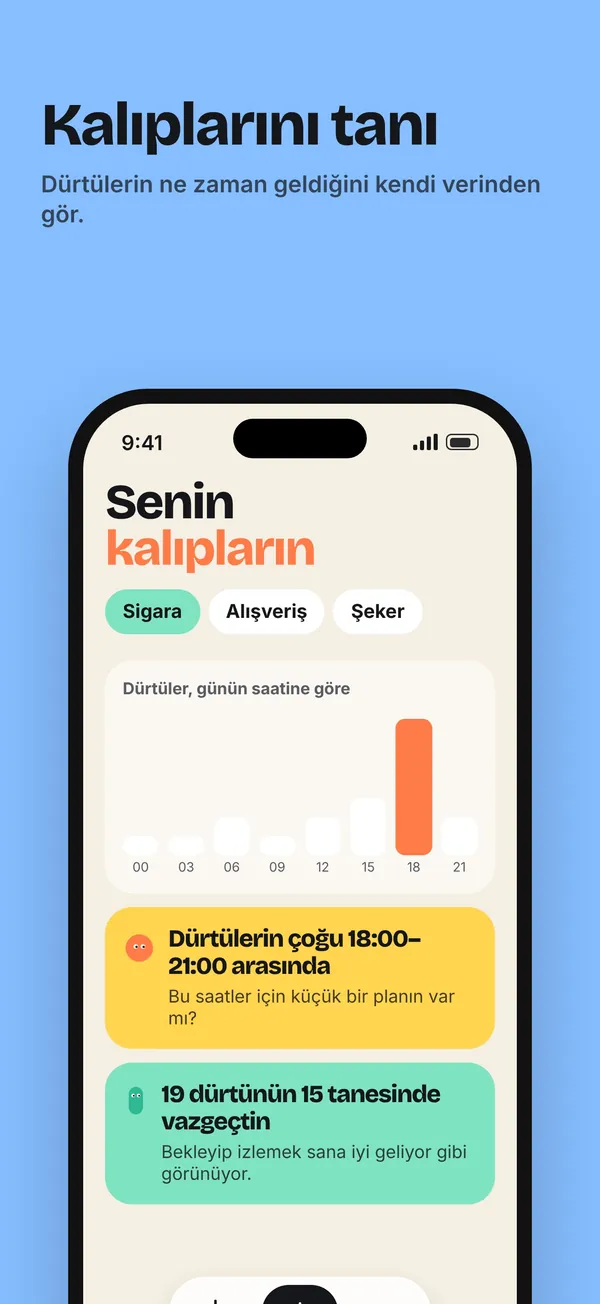
Her seferinde saati ve o an ne olduğunu kısaca not etmek, bir iki hafta içinde sana kendi kalıbını gösterir.
İstek geldiğinde karar vermeden önce ona iki dakika ver. Dürtü sörfü rehberimiz, bir isteğin yükselişini ve düşüşünü nasıl izleyeceğini anlatıyor.
Sakin kal
Bu rehber kilo ya da beden üzerine hiçbir söz vermiyor. Şekere mola, gününde ne kadar eklenmiş şeker olduğunu fark etmenin ve bilerek seçmenin bir yolu.
Saymak takıntıya dönüşmeye başlarsa ya da yemek bir sınav gibi gelmeye başlarsa dur ve doktorunla konuş. Yeme bozukluğu geçmişin varsa başlamadan önce bir uzmanla konuş.
Notidy burada nasıl yardımcı olur
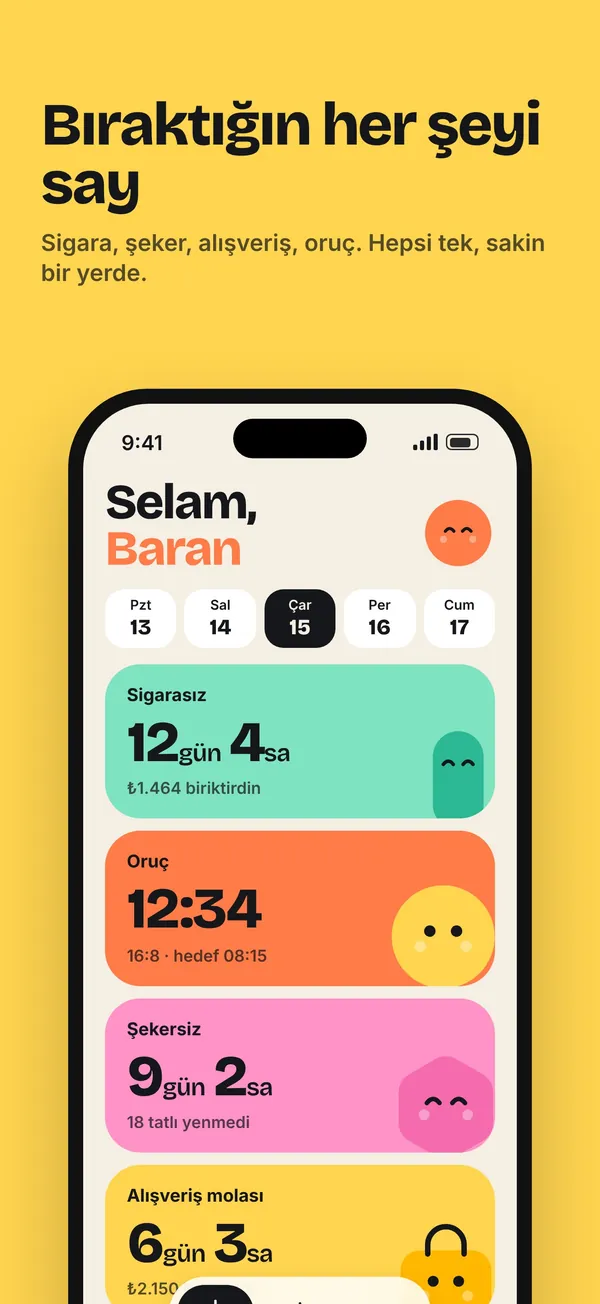
Notidy’de şekersiz günlerini ve saatlerini sayan hazır bir şeker sayacı var. Kendi rakamlarınla yemediğin tatlıları da sayabilir.
Küçük karakteri günler biriktikçe keyiflenir; yol boyunca şeker için bir yol haritası da açılır. Her kart kaynağını (WHO ya da NHS) gösterir ve genel bilgilendirmedir.
Canın çektiğinde “Canım istiyor” düğmesi, nefes dalgası ve kendi nedeninle 2 dakikalık bir mola başlatır.
Kalıplar ekranı en zor saatlerini gösterir; o saatlerden önce nazik bir hatırlatma gelebilir.
Yeniden başlarsan emeğin ve rekorun geçmişinde kalır. Notidy ne yemen gerektiğini söylemez ve tıbbi tavsiye değildir.
Kaynaklar
- WHO calls on countries to reduce sugars intake among adults and children. World Health Organization (WHO), 4 Mart 2015.
- Sugar: the facts. NHS, Son inceleme 19 Mayıs 2023.
Tüm kaynaklar 19 Ekim 2026’da açılıp kontrol edildi. Türkçe aktarımlar kaynakların kendi dilindeki metninden çevrildi. Sağlık bilgileri genel bilgilendirmedir, tıbbi tavsiye değildir.